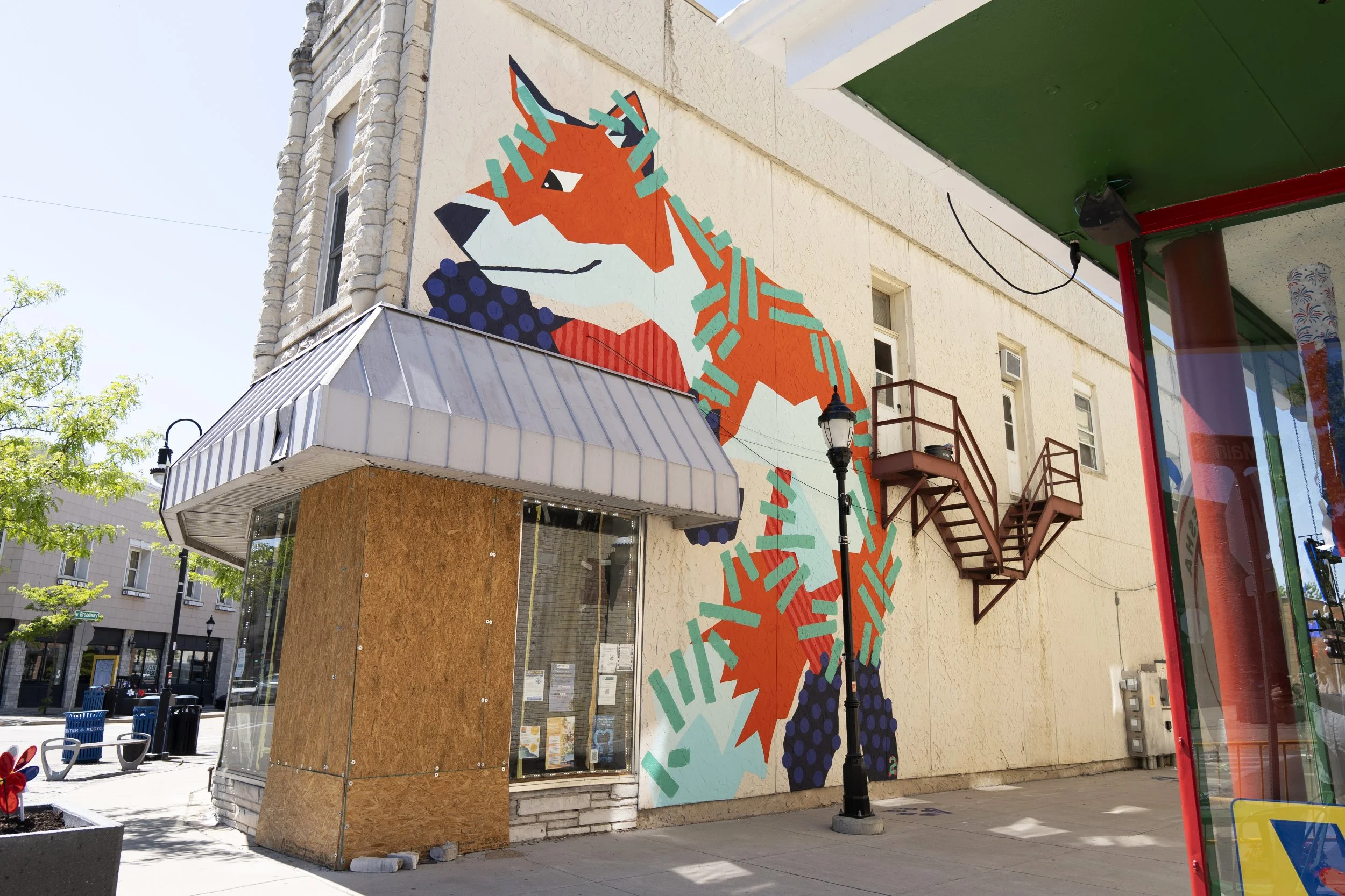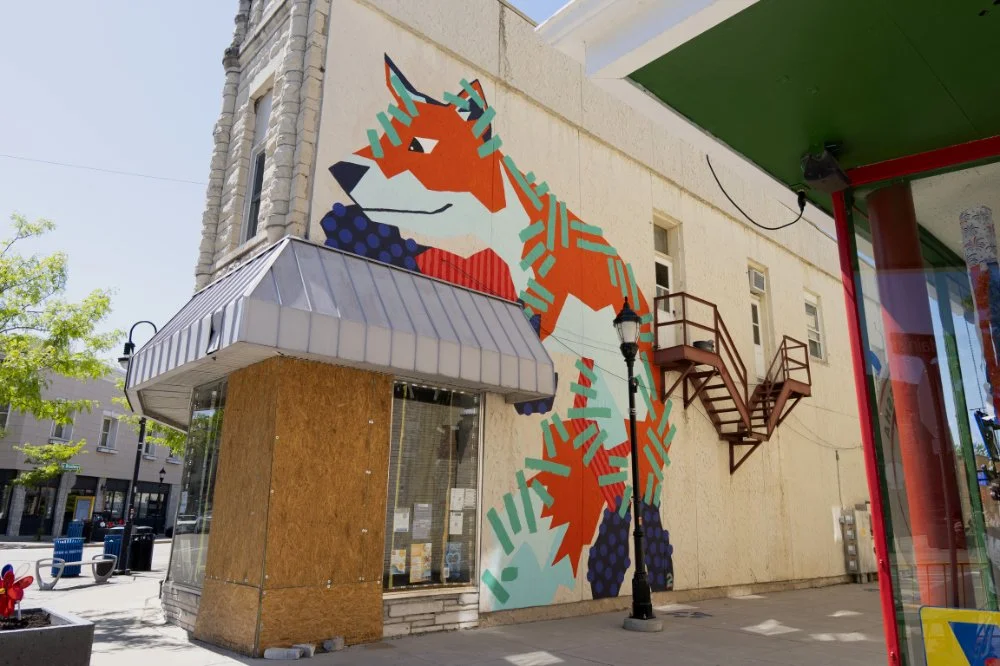
Sometimes the solution is to turn the whole thing upside down. Or, in this case, right-side up.
Every early sketch for Little Fox had him crawling DOWN from the awning—tail stretching up the wall, face and front paws reaching toward the ground. I loved the idea of bringing his face low enough for people to stand beside him and take photos.
It made sense. It was fun. It was…not quite working.
And then I flipped him.
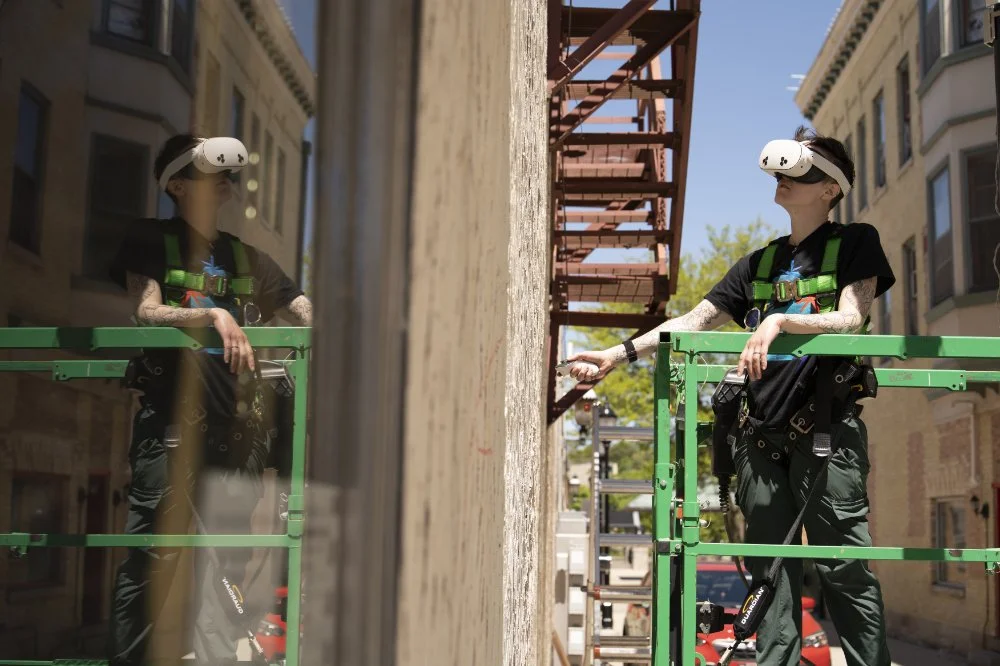
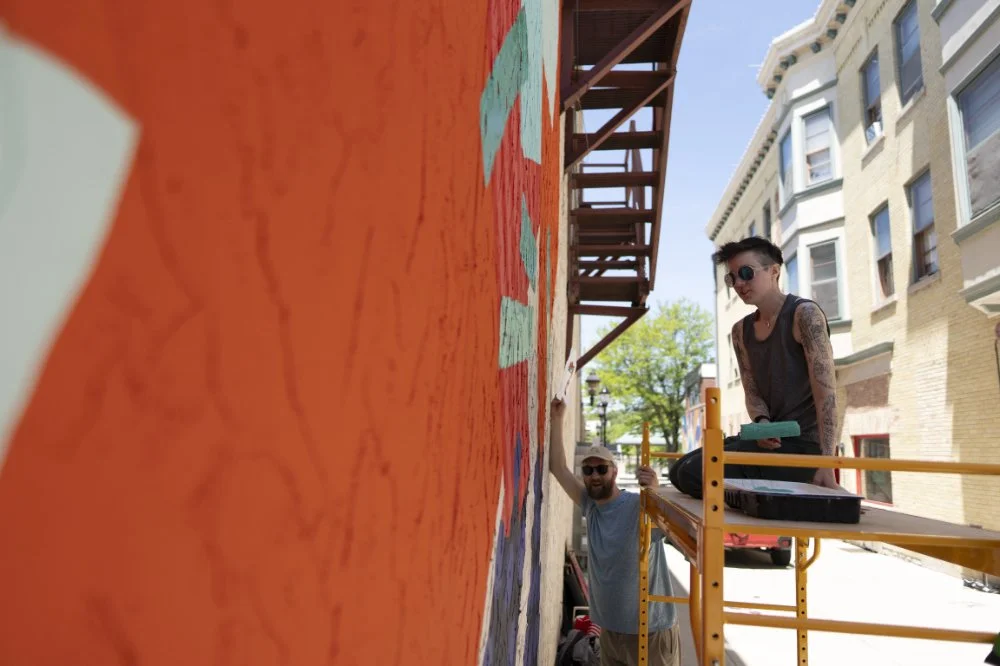
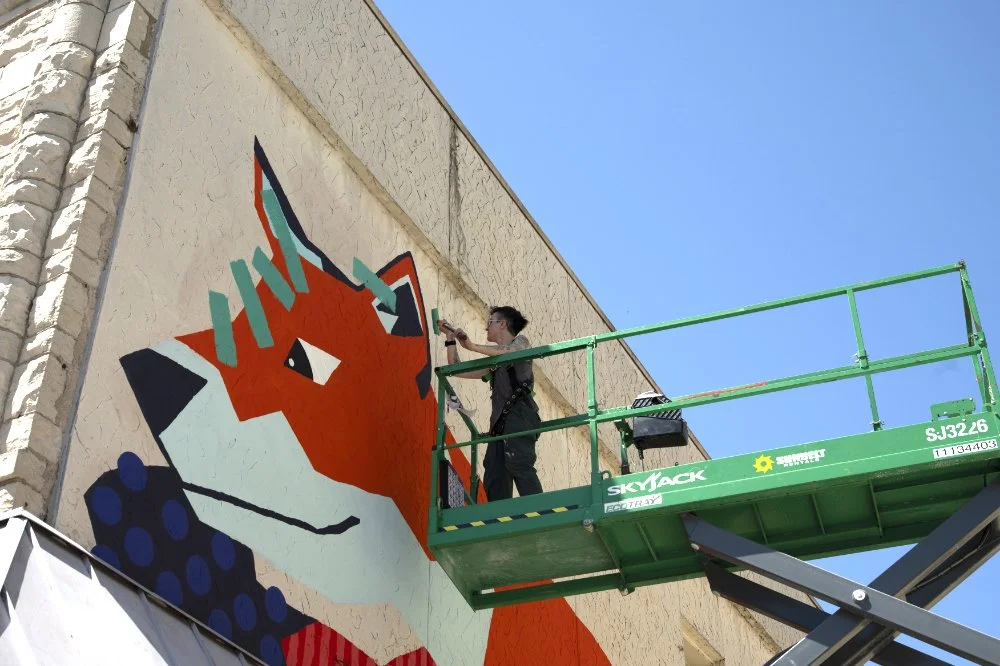
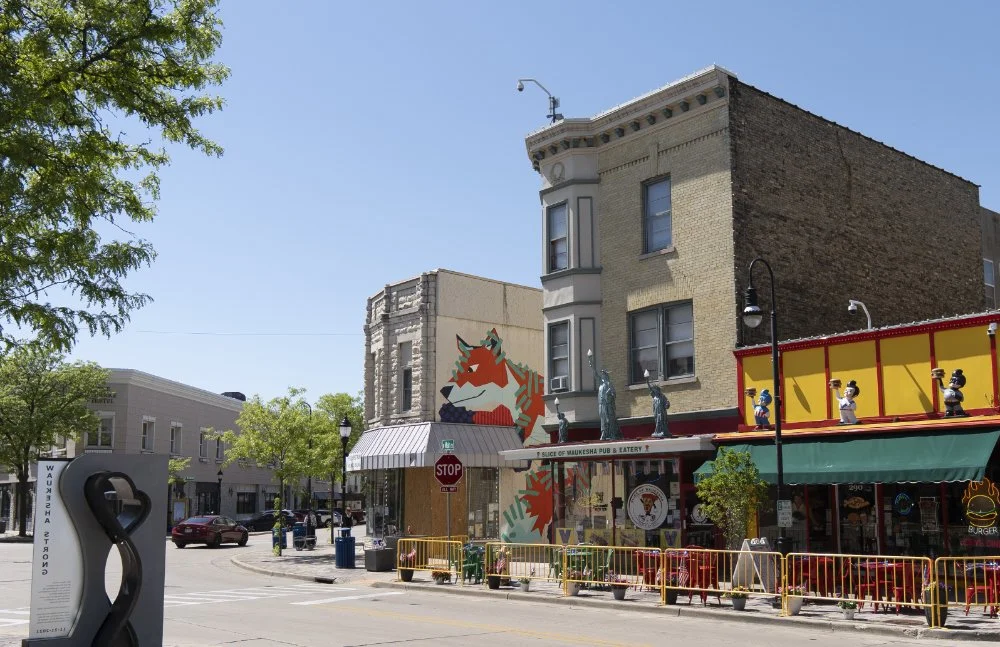
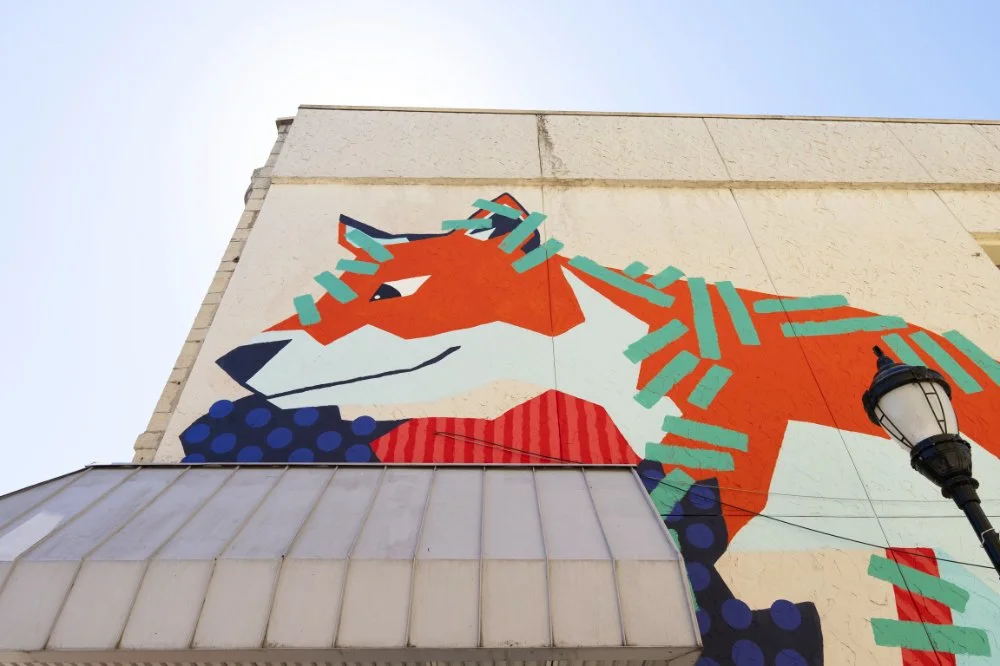
Little Fox was now climbing UP—curiously interacting with the existing architecture and peeking over the awning to greet you. THERE he was. He wasn’t coming down from the wall to meet you anymore; he was inviting you to look up, follow his gaze, and wonder what that giant fox was doing up there.
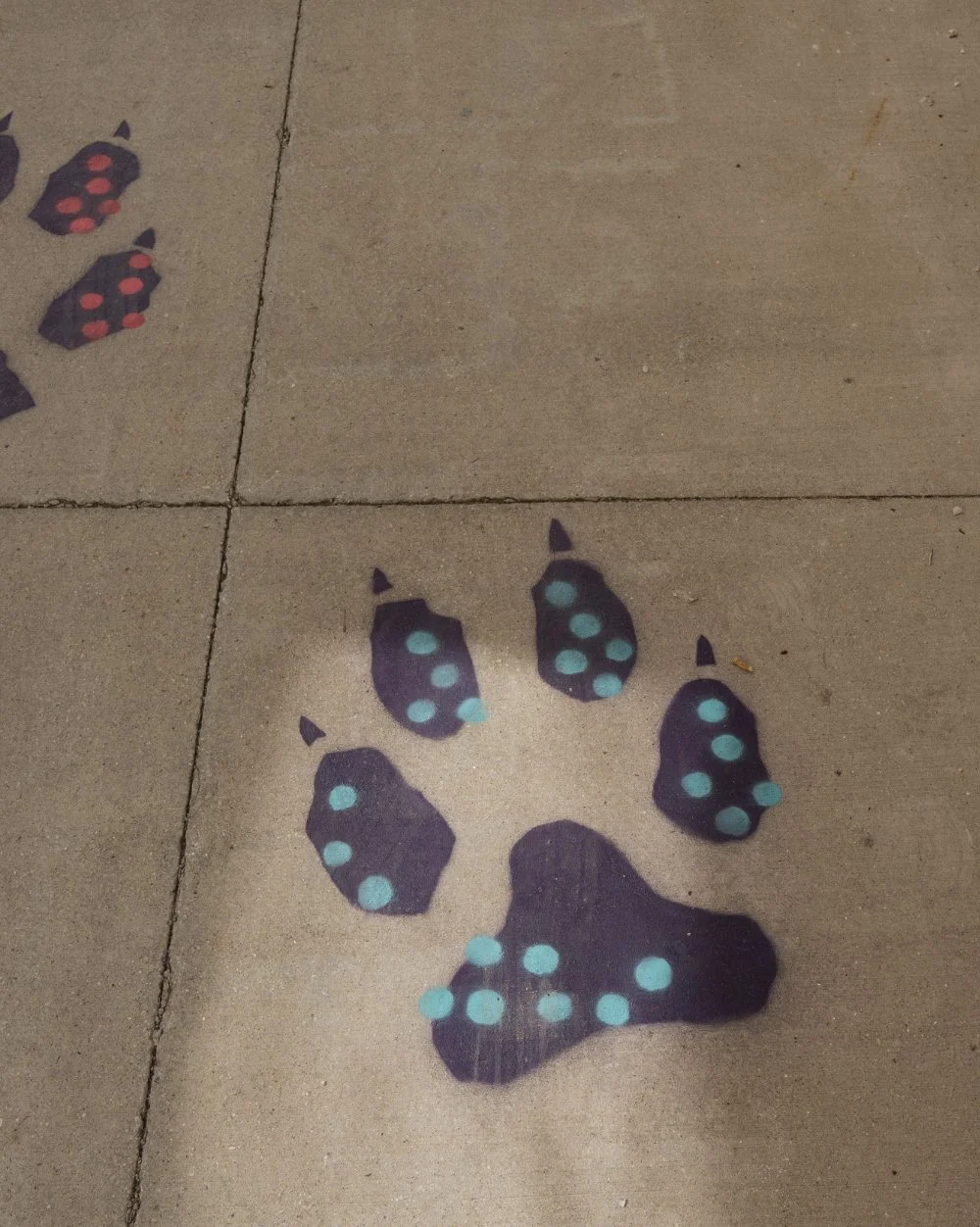
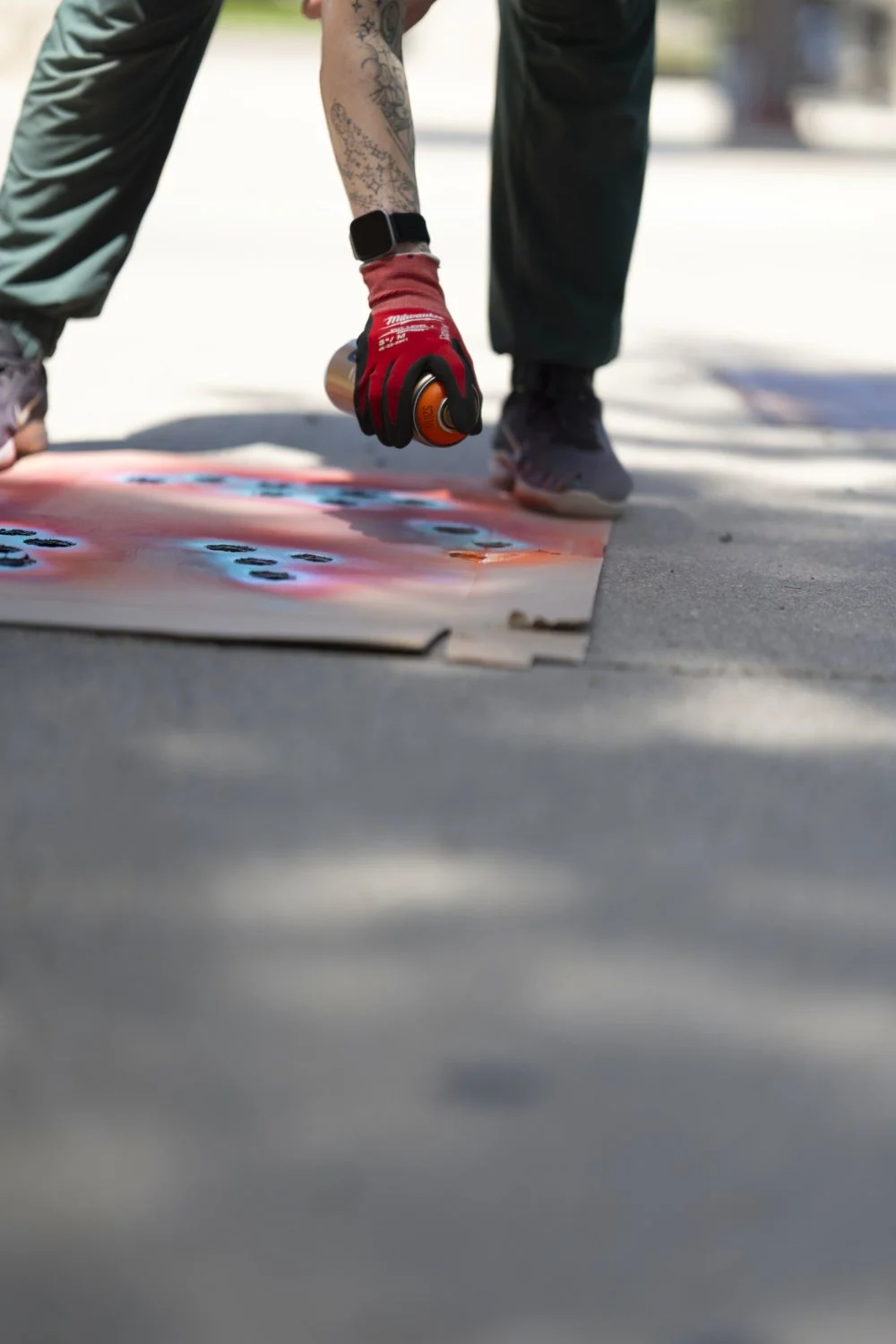
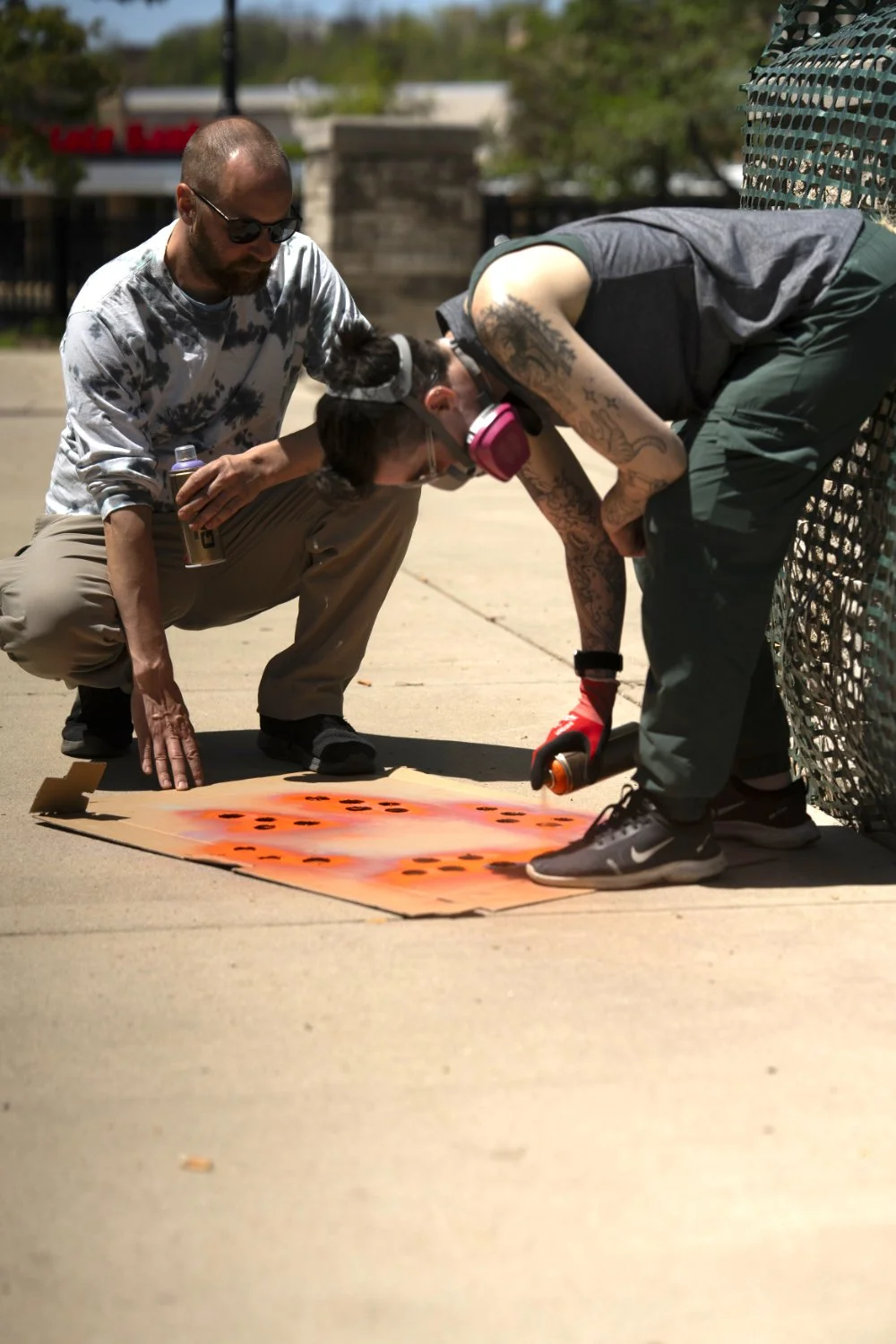
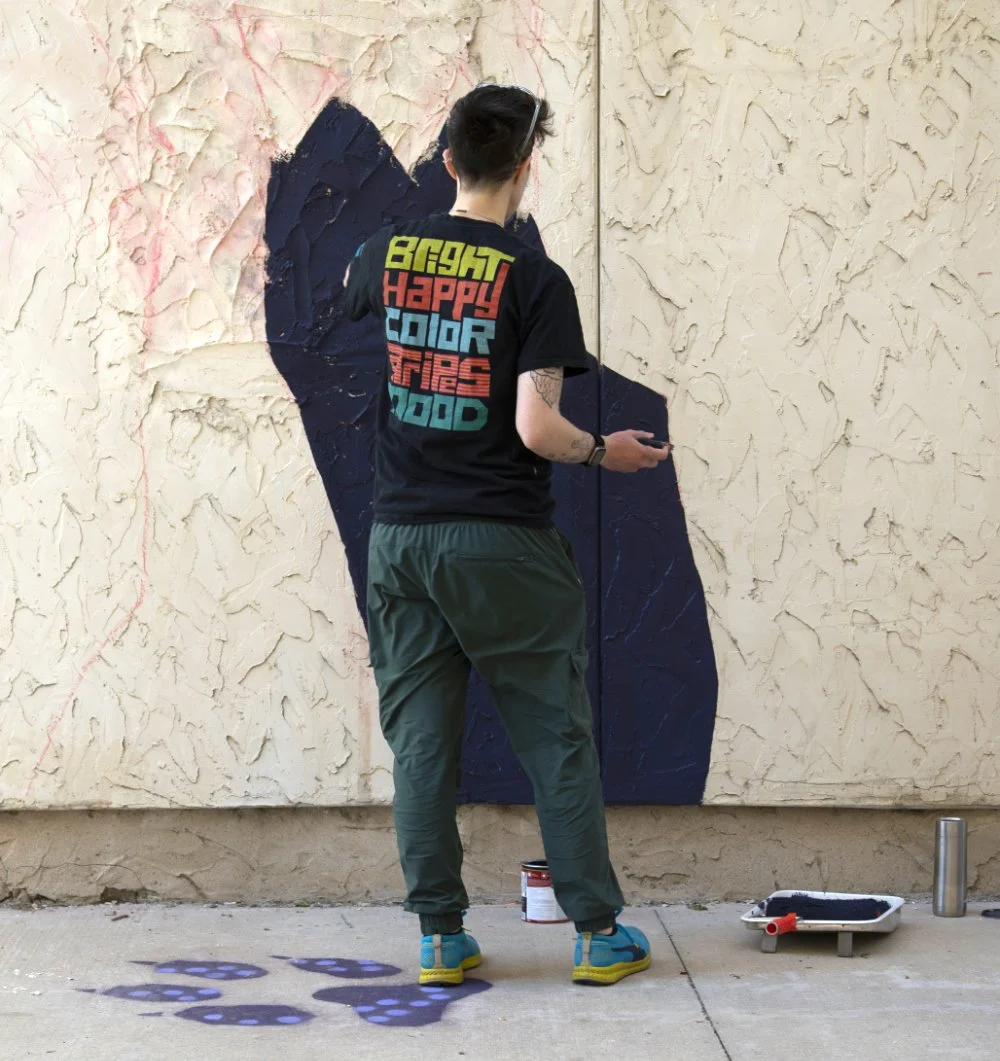
From that end of Friedman Alley, Little Fox pulls you in. From the opposite end, fox footprints begin at the Riverwalk, cross the street, and continue through the entire alley.
While I was still painting, I watched kids discover those footprints. Nobody had to explain a thing. They immediately began hopping, skipping, and running from one to the next—pointing them out to their parents while eagerly searching for whatever came next.
Interaction can take a lot of different shapes, especially with public art. It doesn’t have to mean touching the mural or standing in a designated photo spot. It can be following a trail, looking up, changing direction, slowing down, or moving through a familiar place in a completely new way. The art changes how you move through the space—and, hopefully, how you feel while you’re there.
Little Fox didn’t need to come down to meet people. Between his footprints and that curious peek over the awning, he had already invited them in.